


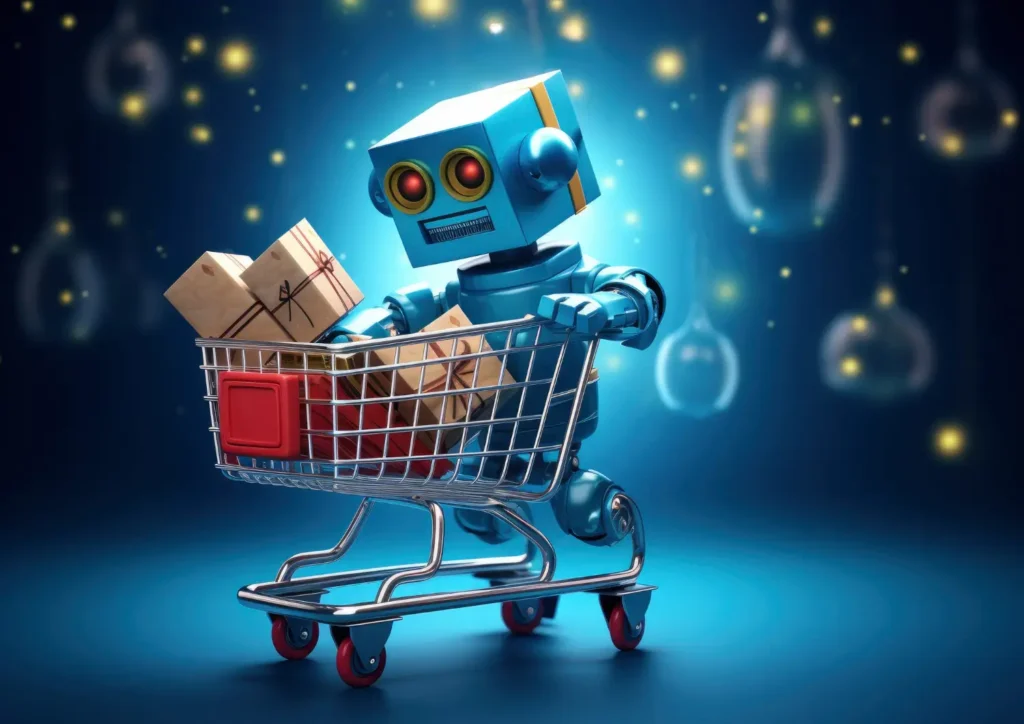
In the fast-paced world of e-commerce, automation has become the key to scaling operations, improving customer satisfaction, and increasing profitability. At the heart of this transformation lies artificial intelligence (AI), with AI chatbots playing a pivotal role. These intelligent assistants are not only streamlining customer support but also revolutionizing various e-commerce workflows—from order management to personalized marketing.
As businesses embrace automation to stay competitive, the use of AI chatbots has expanded rapidly. In this blog, we’ll explore how AI chatbots are reshaping e-commerce workflows, their top benefits, and how they compare to the emerging concept of AI agents.
What Are AI Chatbots in E-commerce?
AI chatbots are software applications powered by natural language processing (NLP), machine learning, and generative AI. They simulate human-like conversations and can handle a wide range of customer interactions, 24/7.
In the e-commerce space, AI chatbots assist customers in:
- Browsing products
- Placing or tracking orders
- Managing returns
- Resolving support issues
- Providing product recommendations
These chatbots act as the first line of support, handling repetitive queries with ease, while freeing up human agents to focus on complex or high-value tasks.
Top E-commerce Workflows Automated by AI Chatbots
Let’s dive into the most important workflows that AI chatbots automate in e-commerce businesses:
1. Customer Support Automation
This is the most obvious and widely adopted use case.
AI chatbots are trained to handle frequently asked questions such as:
- “Where is my order?”
- “How do I return this product?”
- “What’s your shipping policy?”
With instant responses and 24/7 availability, chatbots drastically reduce wait times and improve customer satisfaction. They also integrate with CRM tools and ticketing systems to escalate issues when needed.
2. Pesonalized Product Recommendations
By analyzing browsing history, past purchases, and preferences, AI chatbots can suggest products tailored to each customer. For example:
“You bought running shoes last month—would you like to see some moisture-wicking running socks?”
This personalization improves conversion rates and average order value
3. Abandoned Cart Recovery
Cart abandonment is a major challenge in e-commerce. AI chatbots can detect abandoned carts and engage customers with timely, personalized messages.
They can offer:
- Reminders
- Limited-time discounts
- Product support or alternative suggestions
This proactive engagement helps recover lost revenue without human intervention.
4. Order Tracking and Notifications
Instead of requiring customers to email or call support, AI chatbots can provide real-time updates on order status, shipping timelines, and delivery details—all in a conversational format.
Integrating chatbots with logistics APIs ensures accurate, up-to-date tracking data.
5. Returns and Refund Processing
AI chatbots can guide users through the return process by:
- Validating order numbers
- Collecting reasons for return
- Initiating refund procedures
- Updating backend systems
This makes the process smoother for both the customer and the business, minimizing manual errors.
6. Inventory and Product Inquiries
Customers often ask:
- “Is this item available in size M?”
- “When will this product be back in stock?”
AI chatbots connected to inventory databases can answer these questions instantly, reducing bounce rates and improving sales.
7. Multilingual Customer Engagement
In global e-commerce, serving customers in their native language is essential. Multilingual AI chatbots can communicate in multiple languages, enhancing accessibility and broadening your customer base—without needing a large team of multilingual support staff.
8. Lead Generation and Customer Profiling
AI chatbots help qualify leads by asking relevant questions and segmenting users based on responses. This profiling data can be passed on to sales teams or used to personalize future interactions.
Benefits of AI Chatbots for E-commerce Businesses
- Increased Operational Efficiency
Automating repetitive workflows reduces staff workload and improves response times. - Cost Savings
AI chatbots lower the need for a large customer support team, saving thousands in operational costs. - 24/7 Availability
Customers get help anytime—no matter the timezone—leading to better experiences. - Higher Conversions
Personalized recommendations, quick answers, and proactive support lead to more sales. - Scalability
AI chatbots scale easily during peak traffic (e.g., holiday sales) without sacrificing performance. - Data Collection & Insights
Every interaction with a chatbot is data. You can analyze this to understand customer pain points, preferences, and behavior trends.
How to Get Started with AI Chatbots for E-commerce
- Define Your Goals
What do you want to automate? Support? Sales? Returns? - Choose the Right Platform
Use a no-code or low-code chatbot builder that supports integrations with your e-commerce platform (Shopify, WooCommerce, Magento, etc.) - Train the Bot
Feed it with FAQs, support queries, and product information. Use AI models like GPT for more natural interactions. - Test Extensively
Launch internally first, fix gaps, and only then go live. - Monitor & Improve
Regularly review chatbot performance and train it with new data to keep it accurate.
Looking Ahead: The Future of E-commerce Automation
AI chatbots are just the beginning. As AI agents become more capable, they will take over more complex e-commerce tasks like supply chain management, automated negotiations, or even dynamic pricing strategies.
The line between human-like customer interaction and machine-led automation is already blurring. By adopting AI chatbots now, e-commerce businesses set themselves up for the next wave of intelligent automation.
Conclusion
The role of AI chatbots in automating e-commerce workflows is undeniable. From customer support to order tracking, product recommendations, and returns, these bots enhance efficiency, reduce costs, and deliver superior customer experiences.
As you scale your business, it’s important to evaluate when to evolve from chatbots to full-fledged AI agents for deeper automation. Understanding the difference in capabilities between AI chatbot vs AI agent helps you future-proof your tech stack and stay competitive in the dynamic e-commerce space.