


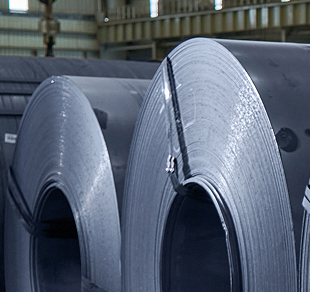
For small fabrication shops, choosing the right HRPO (Hot Rolled Pickled & Oiled) material can cut costs, reduce rework, and speed up production. The trade-offs between coils and cut lengths, typical sizes and thicknesses, and useful advice on managing minimum order quantities (MOQs) without going over budget are all covered in this succinct buying guide.
Know the sizes and thicknesses that matter
HRPO is sold as coils and as cut-to-length sheets or plates. For small fabricators, the primary dimensions to watch are thickness, width, and length.
- Thickness: Fabricators commonly use HRPO in light-to-medium gauge ranges for brackets, frames, and panels. Typical working thicknesses for general fabrication are in the 1–6 mm range; thinner material (under 1 mm) is used for light sheetwork, while thicker plate-style HRPO (6 mm and above) suits heavier structural or heavy-duty parts. Choose the thinnest gauge that still meets strength and stiffness needs — it lowers cost and eases forming/welding.
- Width: Coil widths vary; common working widths for small shops are in the 600–1500 mm band, while larger coils go wider. When ordering cut sheets, standard widths are sized to match your nesting and cutting plans so you minimize waste.
- Length / Coil weight: Coils come wound with a long continuous length; cut lengths are supplied in specific sizes (e.g., plates or sheets). Coil weight affects handling: large coils need lifting gear and a decoiler, while small coils or cut sheets can be handled manually or with a fork-lift.
Always check with your supplier for the exact dimensional tolerances and the grade (e.g., structural mild steel grades) — these affect weldability and forming behavior.
Coils vs cut lengths — pros and cons
Choosing between coils and cut-to-length sheets is a key procurement decision.
Coils — advantages
- Cost per kg is usually lower because there’s less cutting and handling at the mill.
- Less packaging waste and more flexibility for continuous production runs.
- Useful if you have decoiling, straightening and slitting capacity or if you can partner with a local service center to cut slits/flatten.
Coils — disadvantages
- Require equipment (decoiler, straightener, uncoiler) or extra service-center costs.
- Handling heavier coils needs lifting gear and storage space.
- If your shop produces small batches or many short parts, coils can increase offcut waste.
Cut-to-length sheets/plates — advantages
- Immediate use: ready for laser/plasma cutting, shearing, or bending.
- Easier inventory management for small batches and varied part sizes.
- Lower upfront investment — no need for decoilers or additional equipment.
Cut-to-length — disadvantages
- Slightly higher unit price because of cutting and handling.
- You may pay more for tight tolerances or custom sizes.
For most small fabricators without coil-handling equipment, cut lengths are the pragmatic choice. If you’re scaling up and running long, repetitive runs where material waste is predictable, consider investing in coil-handling or working with a local service center that can slit/flatten coils for you.
Minimum order quantity (MOQ) tips — buy smart, not big
MOQs can be a pain for small shops. Use these tactics to keep costs down:
- Work with local service centers: Many mills will only sell full coils, but local processors can buy HRPO coils and sell slit coils or cut sheets in lower quantities.
- Pool orders: Collaborate with other local fabricators to split coils or truckloads — you share transport and reduce per-shop MOQ.
- Ask for remnant lots: Suppliers often have remnants or partial coils leftover from previous orders at discounted rates.
- Negotiate flexible MOQs: If you’re a repeat buyer, ask suppliers about flexible MOQs or trial lots — building a relationship pays off.
- Factor in handling costs: Don’t just look at the sheet price — include cutting, slitting, freight, and storage costs when comparing MOQs.
- Order strategically: For prototyping, prioritize smaller cut-length orders. For recurring parts, standardize sizes to build up to higher-quantity coil purchases later.
Quick buying checklist
Before you place an order, confirm:
- Steel grade and mechanical properties (yield, tensile) match your design.
- Surface condition: pickled & oiled; request photos or samples for visible defects.
- Dimensional tolerances (thickness, flatness, edge condition).
- Whether MTCs (mill test certificates) or traceability documents are supplied.
- Delivery terms including packaging, lead time, and freight cost.
- Any value-added services you require (slitting, cut-to-length, edge conditioning).
Final thought
The proper HRPO purchasing strategy for small fabricators strikes a balance between production mix, handling capacity, and material cost. For flexibility, start with cut-to-length, cultivate relationships with suppliers, and as your volumes stabilize, progressively investigate coils or service-center partnerships. I can create a printable, one-page procurement checklist based on your shop’s size and typical part dimensions if you’d like.