


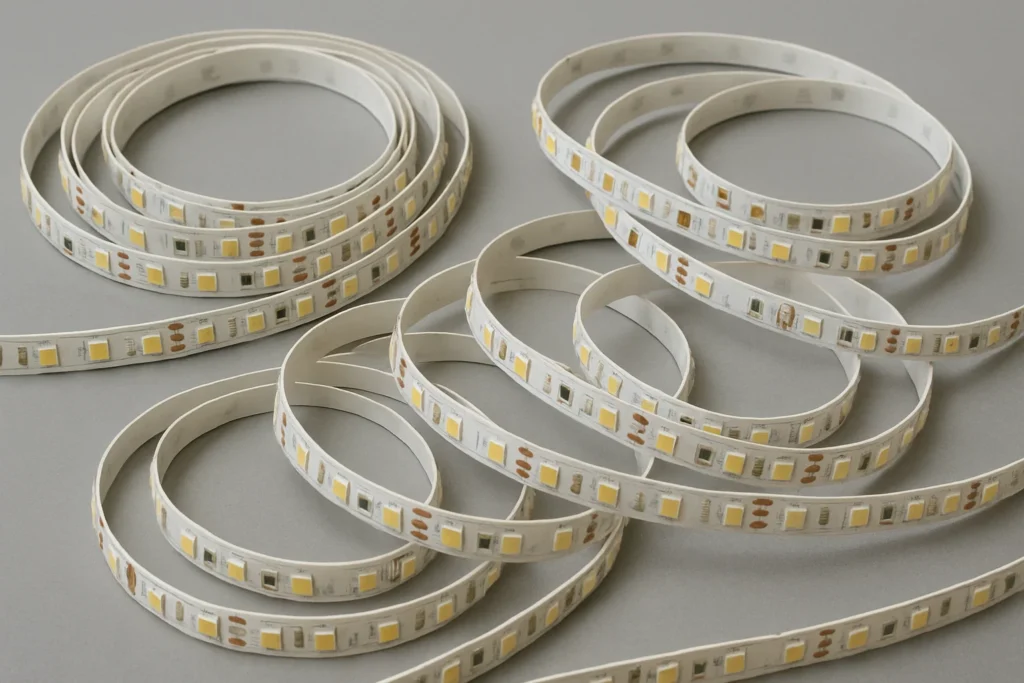
Introduction to LED Strip Lights
LED strip lights, also known as LED light strips or LED strip lighting, have revolutionized the way Canadians light their homes, offices, and commercial spaces. These versatile and energy-efficient lighting solutions are now a staple in interior and exterior design. Whether you’re highlighting kitchen cabinets, creating ambiance in your living room, or adding visibility under stairs, LED strip lights are your go-to solution.
But with the growing popularity comes an overwhelming range of options. From brightness levels to IP ratings, choosing the right LED strip lighting can be daunting. This comprehensive guide will help you make the right choice, ensuring your space looks its best while meeting all functional requirements—especially important for the Canadian climate and safety standards.
What Are LED Strip Lights?
Basic Definition
LED strip lights are flexible circuit boards populated with surface-mounted light-emitting diodes (SMD LEDs). They typically come with an adhesive backing, allowing easy installation on a variety of surfaces.
These lights are available in various lengths, densities, brightness levels, and color temperatures. Some even come with smart home compatibility, offering advanced features such as remote dimming and programmable scenes.
Types of LED Strip Lights
To choose wisely, it’s important to understand the different types of LED strip lighting:
- Single-Color LED Strips: Emit only one color (usually white, warm white, or cool white).
- RGB LED Strips: Can produce multiple colors using red, green, and blue LEDs.
- RGBW LED Strips: Adds a dedicated white LED for more accurate white lighting along with RGB.
- CCT Adjustable LED Strips: Allow you to adjust the color temperature (warm to cool white).
- Smart LED Strips: Wi-Fi or Bluetooth-enabled strips controlled via mobile apps or voice assistants.
- Waterproof LED Strips: Encased in silicone or epoxy for outdoor or damp-area use.
How to Choose the Right LED Strip Light for Your Space
Choosing the right LED light strip depends on your specific needs, space, and environmental factors. Below are the key considerations to guide your selection.
Key Specifications to Consider
1. Brightness (Lumens)
Brightness is a critical factor, especially in functional areas like kitchens or bathrooms. LED strip light brightness is measured in lumens per metre.
- Ambient lighting: 150–300 lm/m
- Accent lighting: 300–600 lm/m
- Task lighting: 700+ lm/m
Canadian Tip: During long winter months with limited daylight, consider brighter strips for living spaces to improve comfort and visibility.
2. Color Temperature (Kelvin Scale)
This defines the warmth or coolness of the light:
- 2700K–3000K: Warm white (cozy, relaxing—ideal for living rooms)
- 3500K–4100K: Neutral white (balanced—suitable for kitchens or bathrooms)
- 5000K–6500K: Cool white (bright, focused—great for garages or offices)
Canadian Insight: In colder provinces, warm white can provide a cozier atmosphere during long winter evenings.
3. IP Rating (Ingress Protection)
The IP rating tells you how resistant the strip is to dust and moisture.
- IP20: For indoor dry areas
- IP44: Splash-resistant (kitchens, near sinks)
- IP65/IP67: Waterproof, ideal for outdoor use or bathrooms
For Canadian Winters: If installing outdoors, opt for IP67-rated waterproof strips to withstand snow, rain, and ice.
4. CRI (Colour Rendering Index)
CRI indicates how accurately the light reveals colors. A higher CRI (80–90+) means better color fidelity.
- Below 80: Acceptable for decorative use
- 80–90: Good for most residential applications
- 90+: Ideal for art displays or spaces where color accuracy matters
Design Tip: For kitchens and bathrooms, choose CRI 90+ to ensure true color tones.
5. Certification (UL, CSA, ETL)
Always choose certified LED strip lighting for safety and compliance with Canadian electrical standards.
- CSA: Canadian Standards Association
- cUL or cETL: Recognized in Canada
- RoHS/CE: Environmental and manufacturing safety (mainly for imports)
Always ensure products are CSA or cUL listed when purchasing in Canada.
6. Average Life Span
Quality LED strips can last up to 50,000 hours or more, which translates to over 10 years if used 12 hours a day. Choose LED strip lights with verified longevity, especially for hard-to-reach installations.
7. Safety Rating & Operating Temperature
- Look for -20°C to +50°C operating ranges.
- Safety-rated strips minimize risks of overheating or short-circuiting.
For Canadian climate: Outdoor installations must be rated for extreme cold and snow exposure.
8. Wattage and Voltage
- Most LED strips operate at 12V or 24V DC, offering safety and compatibility.
- Higher voltage (24V) strips are better for long runs (less voltage drop).
- Match the power supply wattage with a 20% buffer above the total LED strip power draw.
Example: If your strip uses 40W total, use a 50W or higher-rated driver.
9. Beam Angle
- Standard LED strip lights offer a 120° beam angle, ideal for general coverage.
- Narrower angles (60°) are used for focused lighting; wider angles (180°) for uniform glow.
10. Dimmability
Many LED strip lights are dimmable, but only with compatible dimmers and power supplies.
- TRIAC dimming (wall dimmers)
- PWM dimming (with LED controllers)
Mood setting: Dimmable strips are perfect for bedrooms, dining areas, and entertainment zones.
Installation Process
Installing LED strip lights can be a DIY-friendly task or a professional job depending on the complexity. Here’s a general step-by-step guide:
Materials Needed:
- LED strip roll
- Power supply
- Controller (if RGB or dimmable)
- Mounting clips or adhesive backing
- Wire connectors
- Optional diffuser channel (for aesthetics)
Steps:
- Measure the Area: Measure the length where the strip will go. Account for corners and turns.
- Cut to Size: Cut only at designated points (marked on strip).
- Connect to Power Supply: Use connectors or solder wires for a secure connection.
- Mount the Strip: Peel and stick, or use mounting clips for better adhesion.
- Test: Turn on before final installation to ensure everything works.
- Seal (if Outdoor): Use silicone sleeves or waterproof tape for exterior setups.
Canadian Note: In provinces like Ontario or BC, any connection to the home’s mains power must follow electrical code. When in doubt, consult a licensed electrician.
Safety Precautions
When working with electrical products, safety comes first. Here are must-follow precautions:
- Always turn off power during installation.
- Never overload power supplies.
- Use heat-safe mounting surfaces—especially important for high-brightness strips.
- Ensure good ventilation to prevent overheating.
- Avoid cutting or bending near LED chips.
- Use certified transformers and dimmers.
- Keep waterproof strips properly sealed to prevent moisture ingress.
- For outdoor installation, ensure power supply is weatherproof (IP65/IP67) and grounded.
Best Lighting Distributor in Canada: Choose Lumenco
When it comes to sourcing high-quality LED strip lighting in Canada, Lumenco stands out as the top choice.
Why Lumenco?
- Canadian-based: Serving both residential and commercial customers coast to coast.
- Certified Products: All products meet Canadian safety and efficiency standards (CSA, cUL, DLC).
- Wide Selection: From indoor RGB strips to weatherproof outdoor lighting.
- Fast Shipping: Reliable and quick delivery across Canada.
- Expert Support: Lighting professionals help you with product selection and project design.
- Competitive Pricing: Get premium products without breaking the bank.
- Eco-Friendly: LED products that reduce your carbon footprint and energy bills.
Choosing the right LED strip lighting for your Canadian home or business means balancing functionality, safety, and aesthetic appeal. From understanding technical specifications like wattage and CRI to choosing weatherproof options for outdoor use, this guide gives you all the tools to make an informed purchase.
For the best results, always buy from trusted Canadian suppliers like Lumenco, who offer certified, durable, and high-performance lighting solutions tailored for Canadian conditions.